

What’s New at Fitsol
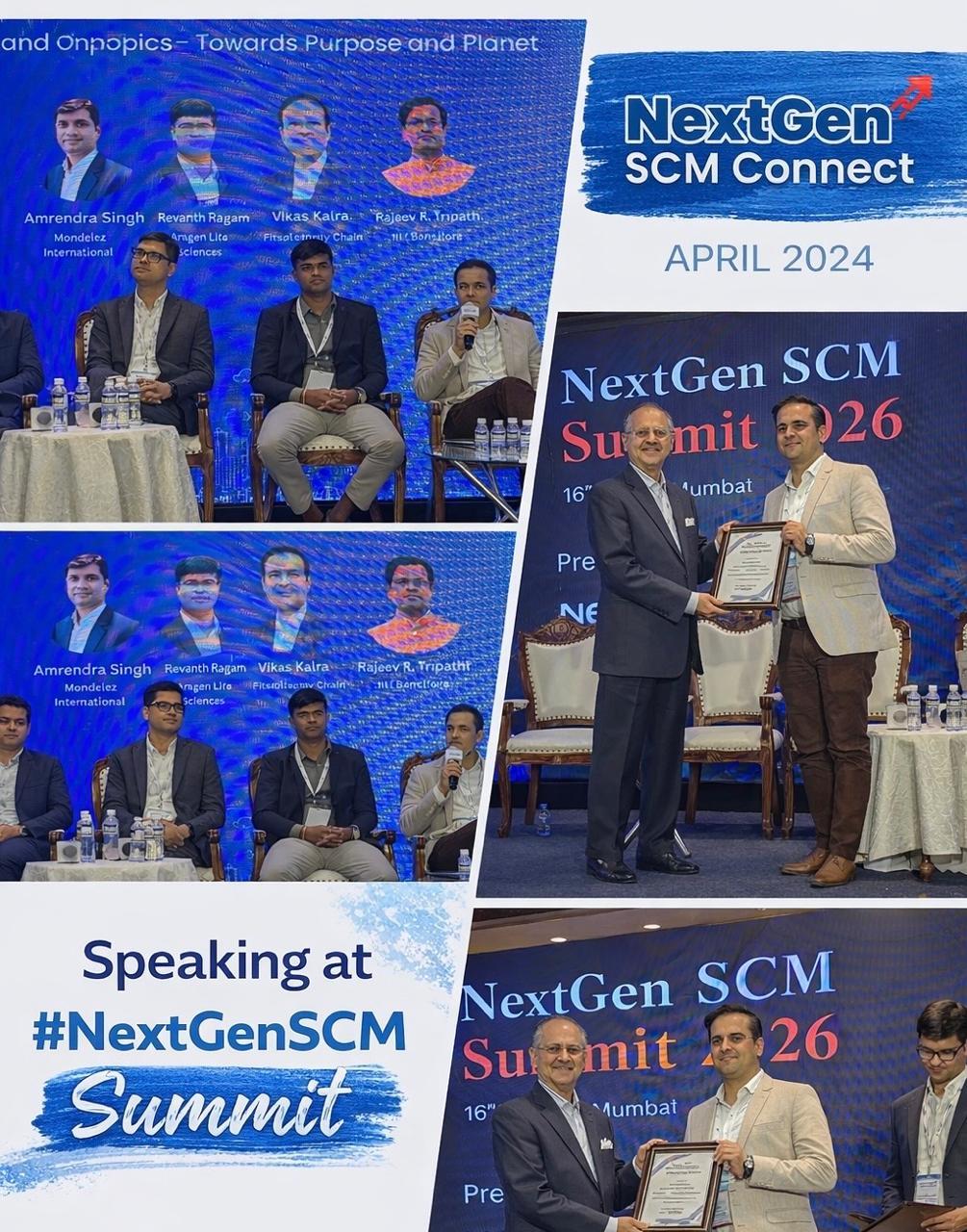
Fitsol at NextGen SCM Summit – Mumbai

Fitsol was proud to be a sustainability partner at the NextGen SCM Summit held on 16th January 2026 at The Orchid Hotel, Mumbai, joining a distinguished lineup of leaders shaping the future of supply chain management in India. Vikas Kalra, Co-Founder & Chief Business Officer of Fitsol, shared actionable insights on supply chain digitisation, integrated logistics models, last-mile efficiency, and agile supply chain strategies for high-growth enterprises. At Fitsol, we enable businesses to tackle complex supply chain challenges, improving visibility, operational efficiency, resilience, and compliance, while turning agile SCM into a strategic growth enabler.
Upcoming Webinars & Panels
Webinar Invite: Scope 3 Data Collection Demystified – Assessments, Suppliers, and Compliance
Understanding Scope 3 emissions is critical for manufacturers, OEMs, and suppliers navigating rising ESG expectations and regulatory compliance. Join Fitsol experts as we break down real-world Scope 3 data collection challenges and actionable strategies.
Webinar Date: Jan 23, 2026
Time: 4:00 – 5:00 PM IST
Speakers:
- Yeshvanth Suresh Babu, Chief Strategy Officer, Fitsol
- Meenakshi Chaudhary, ESG Lead, Fitsol
What You’ll Learn:
- Why Scope 3 data collection fails at scale and how to make it decision-grade
- Realities suppliers face and how structured enablement unlocks accurate data
- Aligning Scope 3 collection with compliance, ESG frameworks, and business growth
Key Takeaway: Scope 3 is not just reporting — it’s an execution and data challenge.
Roundtable Invite: Measuring and Reporting Freight Emissions
SFC is organising the roundtable “Road to Zero Emissions: Measuring and Reporting Freight Emissions” on 10th February 2026 in New Delhi. Fitsol will participate alongside other industry leaders to discuss how standardised freight emissions accounting can accelerate freight decarbonisation in India.
Date: 10th February 2026
Venue: New Delhi
Key Focus:
- Standardising freight emissions measurement and reporting
- Policy and industry collaboration for zero-emission logistics
- Best practices and tools for freight carbon accounting and sustainability
The Fitsol Fix
Sector Spotlight: Fitsol – Green Logistics Solutions
Many enterprises struggle to decarbonize logistics while maintaining efficiency and cost-effectiveness. Common challenges include high transport emissions, inefficient routes, reliance on diesel fleets, and limited visibility into carbon footprints across supply chains.
Key Challenges in Green Logistics:
- Reducing GHG emissions and fuel costs
- Optimising route planning and shipment consolidation
- Integrating low-carbon fleets and energy-efficient warehousing
- Generating audit-ready sustainability and ESG reports
How Fitsol Solves These Challenges:
- AI-powered route optimisation & fleet management to cut emissions and costs
- Sustainable packaging and material solutions for greener supply chains
- Energy-efficient warehousing & operations using solar, LED, and smart systems
- Carbon tracking, reporting & ESG compliance aligned with BRSR, CDP, GRI, CBAM, and CCTS frameworks
With Fitsol Green Logistics, companies achieve measurable carbon reductions, cost savings, and scalable logistics decarbonisation, supporting India’s sustainable supply chain transformation.
Explore Fitsol Green Logistics
Around the World: Trends Shaping Climate & Business
CDP 2025 A List: Rising Global Momentum in Environmental Disclosure
The CDP 2025 A List highlights growing corporate and city-level commitment to climate, water, and forest transparency. In 2025, 877 companies achieved an A score, and 23 earned Triple-A across all categories, showing that cross-domain environmental action is becoming a strategic priority.
More than 23,100 companies, cities, states, and regions disclosed data, with Asia and Europe emerging as leading transparency hubs. 640 investors managing $127 trillion and 270+ buyers engaged with supply chain disclosures, reflecting the mainstream importance of environmental reporting.
Source: ESG News
Philippines Adopts IFRS-Based Mandatory Sustainability Reporting Standards
The Philippine SEC introduced PFRS S1 & S2, aligning local reporting with IFRS Foundation’s ISSB standards. Mandatory reporting begins for large public companies in 2027, with a phased rollout through 2029. Standards cover sustainability and climate-related disclosures, including Scope 1 & 2 GHG emissions, with limited assurance required within two years. Transitional relief allows gradual compliance and delays Scope 3 disclosure. This move aligns the Philippines with ASEAN peers adopting global sustainability reporting standards.
Source: ESG Today
EU ESG Stress Testing Guidelines for Banks and Insurers
European regulators issued ESG stress testing guidelines to help supervisors assess environmental, social, and governance risks for banks and insurers. Published by the European Supervisory Authorities (ESAs), the guidelines aim to create consistent ESG stress testing standards, initially focusing on climate and environmental risks. Implementation begins in 2027 under a “comply or explain” approach. The framework uses risk-based, scenario-driven assessments, emphasizing long- and short-term horizons, robust data management, and ESG expertise.
Source: KnowESG
EU Climate Change Mitigation: Progress and Policy Outlook
The European Environment Agency (EEA) reports that coordinated EU action has cut GHG emissions by 37% below 1990 levels in 2023. EU strategies target energy, transport, industry, and buildings, promoting renewable energy, low-carbon fuels, and energy efficiency. The European Green Deal sets legally binding targets: 55% net reduction by 2030 and climate neutrality by 2050. Progress continues, but gaps remain in emissions reporting and cross-sector policy implementation.
Source: European Environment Agency
US Greenhouse Gas Emissions Rise in 2025
After three years of decline, US GHG emissions rose 2.4% in 2025, driven by a cold winter, rising electricity demand from data centres and cryptocurrency mining, and a 13% surge in coal use. Higher gas prices and delayed coal plant retirements contributed to the increase, offsetting gains from solar energy. Analysts warn that structural electricity demand growth may sustain higher emissions in the coming years.
Source: BBC
To start your decarbonization journey today, visit Fitsol